
Saving money in the summer can be tough. With so many fun shows to see, festivals to attend, and patio nights to indulge in, who wants to make, let alone stick to, a personal budget?
But, do you really want to spend the entire summer working, only to finally make it through to September with nothing to show for it? Here’s where we can help.
Spending a little bit of time making an honest personal finance budget can not only help you stick to a savings plan. It also gives you a sense of understanding and control over your personal finances, decreasing spending anxiety by empowering you with information.
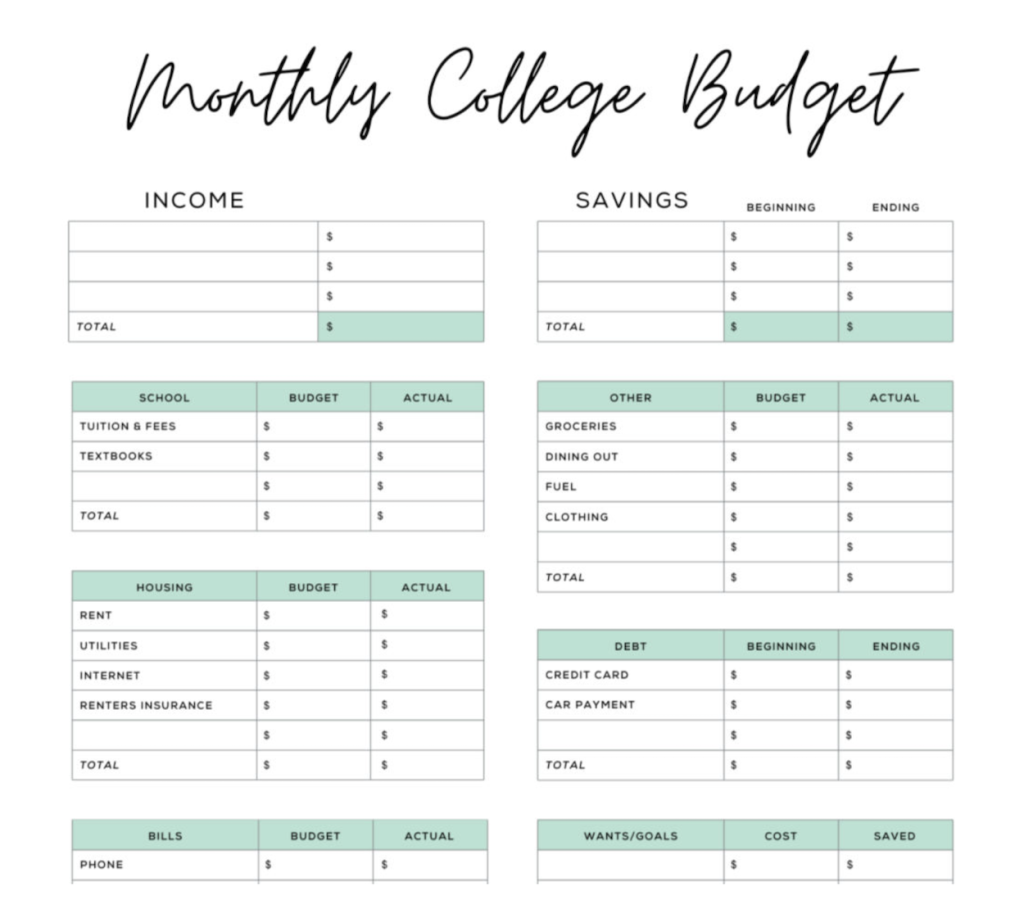
Creating a personal budget isn’t difficult. There are plenty of cute templates you can download to personalize it to your aesthetic as well. You can choose a weekly, monthly, or annual budget plan. But every successful personal budget should be built using these 3 basic steps.
Step 1: Figure Out Your Income
Your first task is to figure out what your monthly income is. You can do this by looking at your pay stubs, taking an average of any tips (if applicable), or by using the CRA Payroll Calculator to determine your net pay (after taxes). For those making tips be careful not to inflate the number, be conservative about the ebbs and flows of the service industry.
List all income streams on your budget sheet and take the total. Now you know how much you. have to work with throughout the month.
Financial Tip: If you are working more than one job this summer, ask your employer (you only need to ask one) about the TD1 Personal Tax Credit Return. Check to make sure you are marking the additional tax to be deducted to save you in April during tax season.
Step 2: Fixed Expenses
Fixed expenses are the money we need to spend to make our world work. Rent, utilities, groceries, internet and cell phone bills, car payments, streaming subscriptions, you see where I am going with this?
For the expenses that are the exact same every month list rent and bills, list them in your personal budget as they are. For the expenses you will need to take an average of, like gas or groceries, always buffer more than you will need. For example, if you think you will spend $250 a month on gas for your car, budget $275. Give yourself a little extra room. Any amounts you don’t spend are bonus at the end of the month!
Make a list of all your monthly expenses and take the total. Subtract the total fixed expenses from your monthly income, what’s left over: fun money.
Financial tip: Check your bank statements to confirm your current fixed expenses. Don’t be shy to list them all. Now is the time to audit. You can finally cancel that subscription to the Hollywood Suite on Prime Video that you barely use.
Step 3: Balance Spending and Savings
Now is the time where you get to ask yourself: what are my financial goals for the summer? Are you wanting to focus on saving? Would you rather work to fund experiences and concerts all summer? At this stage of the game – as long as your fixed expenses are taken care of – there is no wrong answer to this question. Be honest with yourself about how you really want to spend your money, and make a plan from there.
Savings Focused
If your goals are to save. We suggest starting at your overall savings goal and work your way backwards from there. Let’s say you want to save $1200 this summer and you have 12 weeks to do it. You need to save $100 per week to accomplish that goal. Add that savings plan into your fixed expenses, and treat it as a non-negotiable bill.
Based on what income you have left, you can lay out all the other areas in your life you spend. Clothes, dining out, entertainment, what we consider “fun money”. Plan out how much you have monthly to spend in each category. You’ll feel confident that when you plan drinks with your friends, it won’t be throwing off your savings goals.
Financial Tip: Try setting up automatic payments into your savings account to ensure you achieve your goals.
Spending Focused
If you aren’t looking to save this summer, but you want to spend your money on some fun activities that’s totally okay! Everyone has different priorities and that’s okay.
Let’s say you’re in a wedding this summer or are planning on attending a music festival, whatever you;ve got going on you can set up your personal budget to make sure you don’t have any stress when tapping your card.
Outline everything you want to spend your money on this summer and be realistic about how much everything is going to cost. We suggest adding a buffer into the amounts, especially when it comes to shopping or a night out on the town. Planning in advance allows you to know how much you can spend in each category.
Work the Budget
Going through the financial audit and creating your personal budget is an amazing first step. To really get the best out of your budget you have to work the system. Input your spending into your budget or one of the many apps available and keep yourself informed about your finances every day of the month.